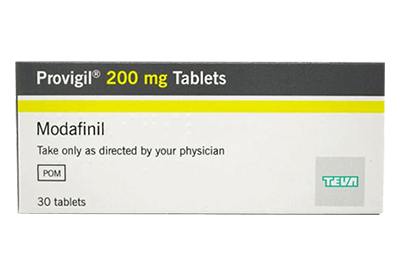


Modafinil is a prescription-only wakefulness-promoting medicine used in the UK to treat excessive sleepiness associated with narcolepsy in adults, with or without cataplexy. Narcolepsy is a long-term neurological condition that disrupts the normal regulation of sleep and wakefulness and can cause significant daytime drowsiness or unexpected sleep attacks.
Modafinil acts on the central nervous system to promote wakefulness, helping appropriately diagnosed patients remain awake during the day. It is available in recognised UK strengths of 100 mg and 200 mg.
People searching for Modafinil tablets or Modafinil online in the UK should understand that treatment requires an appropriate diagnosis, prescription and ongoing clinical monitoring.
Important: Modafinil should only be used when clinically appropriate and according to the instructions of the healthcare professional responsible for prescribing it.
What Is Modafinil?
Modafinil is a wakefulness-promoting medicine that acts on the central nervous system. Unlike traditional amphetamine-type stimulants, its pharmacological profile is different, although its precise mechanism of action is not thoroughly understood.
In the UK, Modafinil tablets are licensed for adults experiencing excessive sleepiness associated with narcolepsy, whether or not cataplexy is also present.
Excessive sleepiness means having difficulty maintaining wakefulness and an increased likelihood of falling asleep at inappropriate times. Cataplexy involves temporary muscle weakness, often triggered by strong emotions.
Modafinil does not cure narcolepsy. Instead, it is used to help control excessive daytime sleepiness as part of the ongoing management of the condition.
Treatment should begin under the supervision of a doctor with appropriate knowledge of sleep disorders.
Modafinil 100 mg and 200 mg Tablets
Current UK-authorised Modafinil tablets are available in 100 mg and 200 mg strengths.
The appropriate dose and treatment schedule the healthcare professional responsible for the patient’s care determines the appropriate dose and treatment schedule. The healthcare professional responsible for the patient’s care determines the appropriate dose and treatment schedule. Factors such as response to treatment, age, liver function and adverse effects can influence prescribing decisions.
Patients over 65 years may require a lower starting dose because clearance of the medicine Patients over 65 years may need a lower starting dose due to reduced clearance of the medicine. Dose reduction is also recommended in severe liver impairment.
Patients should always check the strength on their dispensing label and medicine packaging and follow the prescribed directions. They should not independently increase their Modafinil dosage because they continue to experience daytime sleepiness.
What Is Modafinil Used For?
In the UK, modafinil is licensed for treating excessive sleepiness associated with narcolepsy in adults, with or without cataplexy.
Narcolepsy can cause symptoms, including:
- Excessive daytime sleepiness
- Sudden sleep attacks
- Difficulty remaining awake
- Cataplexy in some patients
- Disrupted night-time sleep
- Sleep paralysis
Not every person experiencing daytime tiredness has narcolepsy. Lack of sleep, other sleep disorders, medicines, physical illnesses and psychological conditions can also contribute to daytime sleepiness.
For this reason, UK product information states that patients should undergo a complete evaluation of excessive sleepiness and receive an appropriate diagnosis of narcolepsy before modafinil treatment is started.
How Does Modafinil Work?
Modafinil promotes wakefulness by affecting activity within the central nervous system, although its exact mechanism is not fully established.
Research indicates that modafinil interacts with several neurotransmitter systems involved in regulating wakefulness. Its effects include interaction with dopamine transporters and an increase in extracellular dopamine in certain areas of the brain.
However, its wake-promoting action is more complex than the effect on one neurotransmitter alone.
The practical result is increased wakefulness in people with narcolepsy who experience excessive daytime sleepiness.
Modafinil should not be regarded simply as a source of additional energy or as a substitute for adequate sleep. Its recognised UK medical role is specifically connected to the diagnosis of narcolepsy.
How Should Modafinil Be Taken?
Modafinil tablets are taken orally and should be swallowed according to the instructions supplied by the prescriber and pharmacy.
Treatment should be initiated by, or under the supervision of, a doctor with appropriate knowledge of narcolepsy.
The precise treatment schedule depends on clinical assessment and response. Patients should follow their dispensing label rather than changing the timing or amount themselves.
Taking additional Modafinil tablets because sleepiness persists is not appropriate without professional assessment. Continued excessive sleepiness may require the underlying condition and treatment to be reviewed.
If more than the prescribed amount has been taken, urgent medical advice should be sought because overdose can cause neurological, cardiovascular and psychiatric symptoms.
How Long Is Modafinil Normally Used?
Narcolepsy is generally a long-term condition, so some patients may require continuing treatment when modafinil remains clinically effective and well tolerated.
However, the need for treatment should be reviewed periodically.
UK prescribing information notes that the long-term efficacy of modafinil beyond nine weeks has not been evaluated in long-term clinical studies. Healthcare professionals prescribing it for extended periods should therefore periodically reassess whether continued treatment remains appropriate.
Patients should attend recommended reviews and discuss changes in sleepiness, adverse effects or other health conditions with the healthcare professional responsible for their treatment.
Side Effects of Modafinil
Like all medicines, Modafinil tablets can cause side effects, although not everyone experiences them.
Headache is a very commonly reported adverse effect. Other recognised effects include:
- Dizziness
- Sleepiness
- Difficulty sleeping
- Nervousness or anxiety
- Palpitations
- Increased heart rate
- Abdominal discomfort
- Nausea
- Dry mouth
- Reduced appetite
- Blurred vision
An important safety concern is the possibility of serious skin reactions. Severe reactions, including Stevens-Johnson syndrome, toxic epidermal necrolysis and drug reaction with eosinophilia and systemic symptoms, have been reported.
Psychiatric reactions can also occur, including anxiety, agitation, depression, abnormal thinking and, less commonly, serious behavioural or psychotic symptoms.
Patients who develop a rash should seek medical advice promptly. Serious allergic symptoms, severe skin reactions or significant psychiatric changes require urgent medical assessment.
Modafinil, Driving and Alertness
Although Modafinil promotes wakefulness, it does not guarantee that excessive sleepiness will completely disappear.
Narcolepsy itself can significantly affect driving safety. People diagnosed with narcolepsy should follow current DVLA requirements and professional advice about driving.
Modafinil may also cause dizziness or blurred vision in some patients. Anyone experiencing these effects should avoid driving or operating machinery.
Patients should never assume that taking a wakefulness-promoting medicine automatically makes them safe to drive. Their underlying condition, remaining sleepiness and individual response to treatment all need to be considered.
Medicines That May Interact With Modafinil
Modafinil can affect liver enzymes responsible for processing other medicines and may therefore change their effectiveness or concentration.
Relevant interactions can involve certain things:
- Hormonal contraceptives
- Anticonvulsants
- Antidepressants
- Anticoagulants
- Ciclosporin
- Medicines metabolised through CYP enzyme pathways
A particularly important interaction involves hormonal contraception. Modafinil can reduce the effectiveness of steroidal contraceptives because it can increase the activity of enzymes involved in their metabolism.
Women who could become pregnant should therefore discuss suitable contraceptive methods with a healthcare professional.
Patients should provide their prescriber with a complete list of prescription medicines, non-prescription products, herbal remedies and supplements before starting Modafinil.
Who Should Not Take Modafinil?
Modafinil is not appropriate for everyone. Current UK prescribing information lists uncontrolled moderate to severe hypertension and cardiac arrhythmias among its contraindications. It should also not be used by anyone with hypersensitivity to modafinil or ingredients in the particular tablet.
Additional assessment and monitoring may be required for people with:
- Cardiovascular disease
- High blood pressure
- Liver impairment
- Kidney impairment
- Previous psychiatric illness
- A history of alcohol, medicine or drug misuse
Blood pressure and heart rate may need monitoring during treatment.
Modafinil should not be used in children under 18 because of safety and efficacy concerns.
Pregnancy requires particular attention because modafinil has been associated with a potential risk of congenital malformations.
Modafinil and Pregnancy
Modafinil should not be used during pregnancy. UK safety guidance highlights a potential increased risk of congenital malformations associated with exposure during pregnancy.
Women who could become pregnant need effective contraception during treatment and for two months after stopping Modafinil.
An additional consideration is that Modafinil can reduce the effectiveness of steroidal contraceptives, including certain contraceptive pills. Alternative or additional contraceptive methods may therefore be necessary.
Anyone who is pregnant, thinks they may be pregnant or plans to become pregnant should discuss treatment with an appropriate healthcare professional rather than changing medication independently.
Misuse and Dependence
Modafinil has wakefulness-promoting and psychoactive properties, so the possibility of misuse should be considered.
UK product information advises clinicians to assess patients for a history of alcohol, medicinal or illicit substance misuse and to monitor for signs of misuse or abuse during treatment.
Modafinil should not be taken simply to study for longer, work extended hours, improve productivity or compensate for insufficient sleep.
Patients should use only the amount prescribed to them and should never share their medicine with another person.
Any urge to increase the dose or use Modafinil differently from the prescribed directions should be discussed with the responsible healthcare professional.
Buy Modafinil Online in the UK
People searching to buy Modafinil online in the UK, Modafinil tablets in the UK or Modafinil online should be aware that Modafinil is a Prescription Only Medicine (POM) in the UK.
Online availability does not remove the need for an appropriate clinical assessment and prescription.
This information is particularly important because excessive daytime sleepiness requires proper investigation. Someone who assumes they have narcolepsy could have another sleep disorder, insufficient sleep or an unrelated medical condition.
Unverified websites, social-media sellers and messaging-app suppliers may also offer medicines of uncertain origin. Products obtained from these sources may be counterfeit, incorrectly labelled, improperly stored or contain an unexpected active ingredient or strength.
A legitimate online medicine service should provide appropriate prescribing and dispensing safeguards.
Can Modafinil Be Bought Over the Counter?
No. Modafinil is classified as a Prescription Only Medicine (POM) in the UK. It is not an ordinary over-the-counter medicine that can simply be selected and purchased without appropriate prescribing.
A diagnosis of narcolepsy should be established before licensed treatment is initiated.
People experiencing persistent daytime sleepiness should therefore seek medical assessment rather than attempting to treat unexplained tiredness themselves with Modafinil or other wakefulness-promoting medications.
Buying Modafinil Safely Online
Patients using online healthcare services should verify who is prescribing and dispensing their medicine.
Pharmacies operating in Great Britain You can check pharmacies operating in Great Britain using the General Pharmaceutical Council register. In Northern Ireland, the Pharmaceutical Society of Northern Ireland is the relevant pharmacy regulator.
Extra caution is appropriate when a website offers prescription medicines without meaningful clinical checks, provides little information about the dispensing pharmacy or promotes Modafinil mainly for studying, productivity or staying awake.
Patients should also check that the medicine supplied matches the product, strength and instructions stated on their prescription.
How to Store Modafinil
Patients should follow the storage instructions printed on the packaging and patient information leaflet supplied with their particular Modafinil tablets.
Keep the medicine in its appropriate packaging and out of the sight and reach of children. Always verify the expiry date before taking tablets.
Prescription medicines should never be shared with another person. Unwanted or expired Modafinil should be disposed of appropriately, and a pharmacist can provide advice about safe medicine disposal.
Important Safety Information
Modafinil should only be used as prescribed following an appropriate diagnosis of narcolepsy. Patients should not independently increase their dose or use the medicine primarily to extend working, studying or waking hours.
Professional advice should be sought about side effects, interactions, contraception, pregnancy and continuing excessive sleepiness.
Always read the patient information leaflet supplied with the medicine.
This information is educational and does not replace personalised assessment, diagnosis or treatment from a doctor, pharmacist or other appropriately qualified healthcare professional.